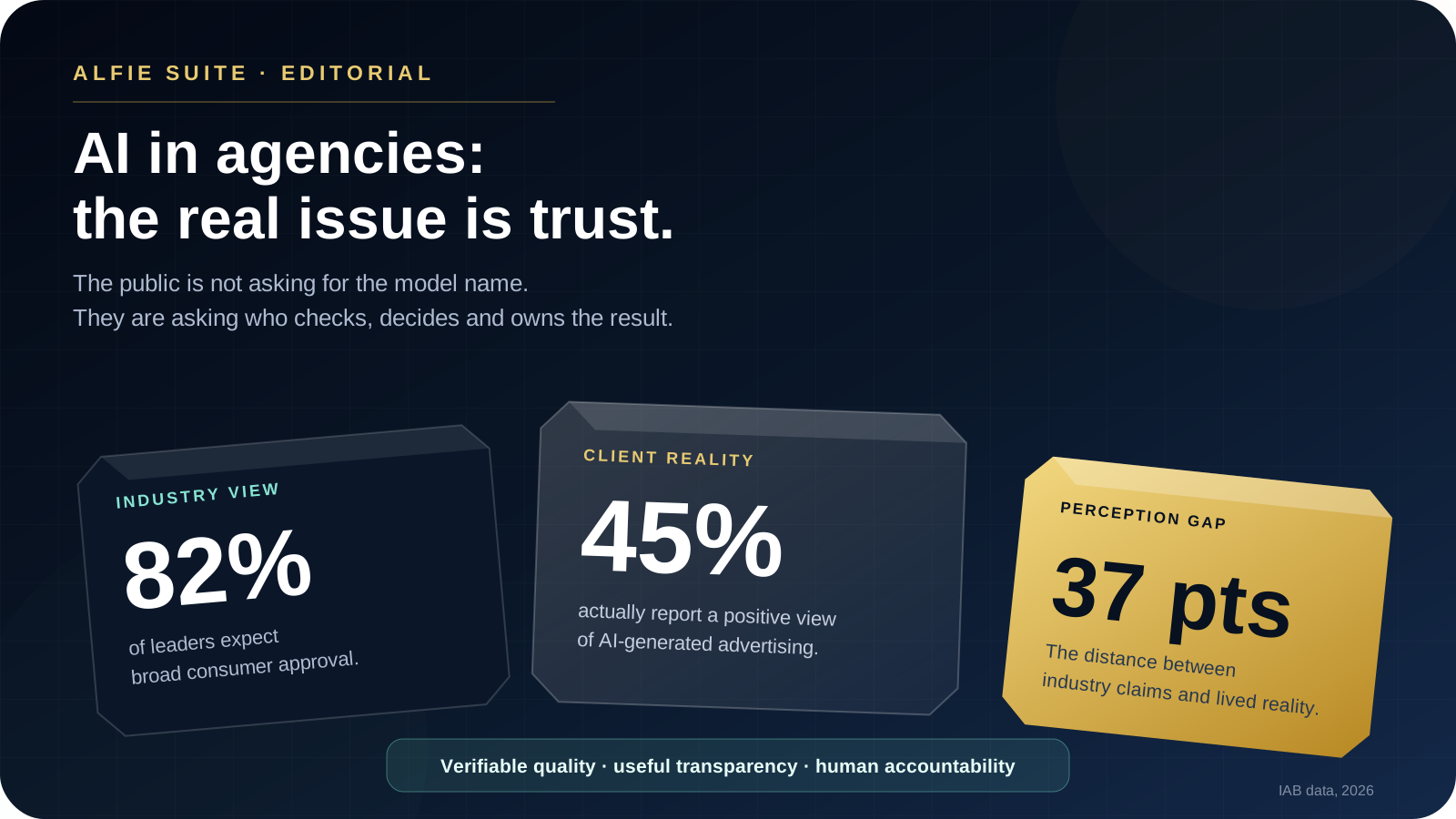
Should agencies price AI-assisted services differently?
An AI-assisted service should not be priced according to the minutes saved by a model. Price should reflect the outcome, framing, review, risk and responsibility the agency accepts.
Nathalie StaelensGhostwriter and Web Writer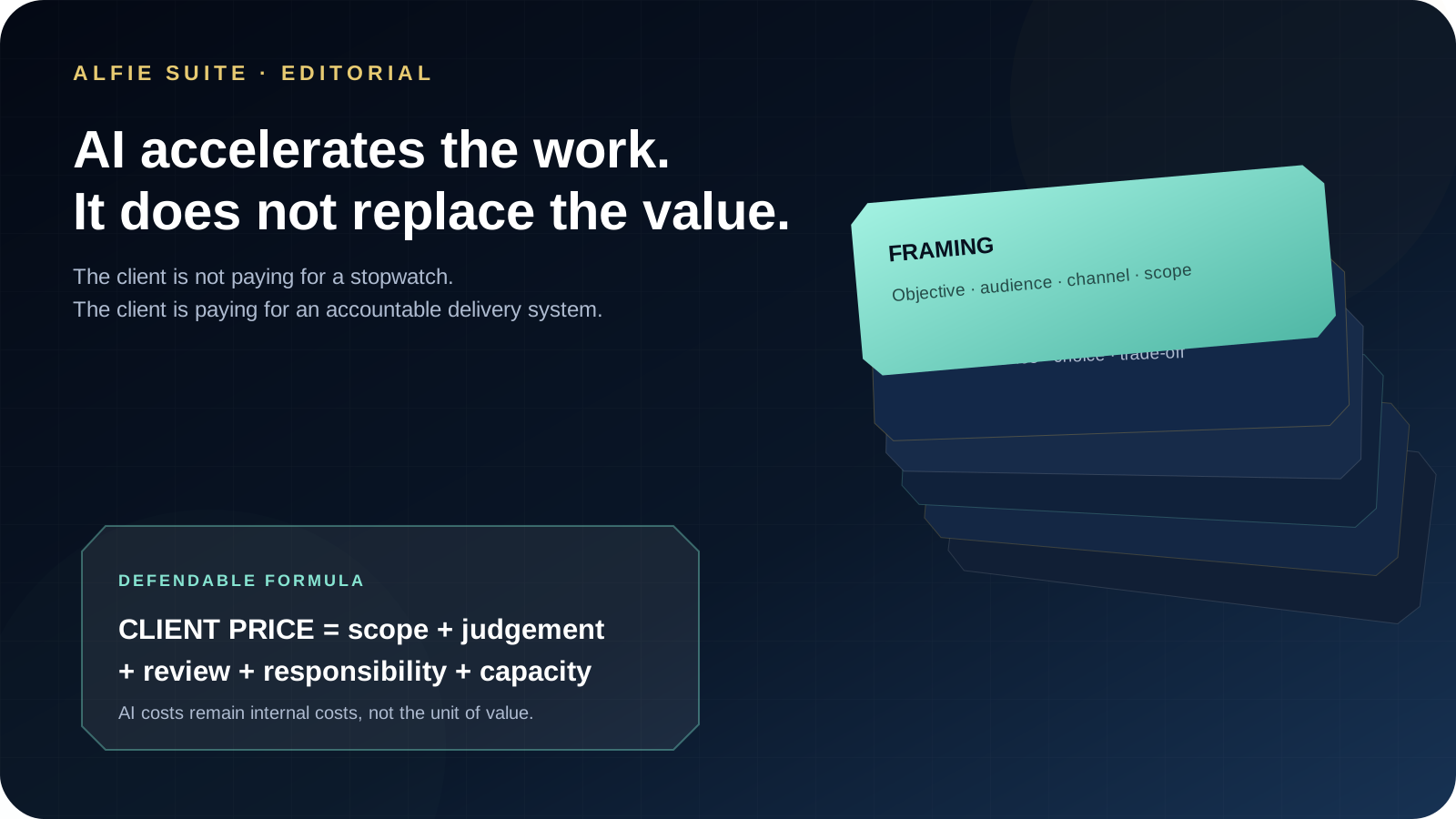
The client has seen the demonstration. An image appeared in seconds, followed by a draft before the coffee had cooled. He looks at the output, then at the proposal, as though the two witnesses are telling slightly different stories.
“Why does it still cost this much?”
The question is not insolent. It is incomplete. The client saw the moment of generation, not the work surrounding it: the context gathered, the angle selected, the weak ideas discarded, the creative direction, the facts checked, the rights reviewed, the corrections, the campaign consistency, the responsibility and the final delivery.
AI compresses certain tasks. It does not automatically turn a professional service into a free product.
The stopwatch has become an unreliable witness
For years, agencies defended prices with hours. Ten hours of copywriting. Six hours of design. Three hours of coordination. The calculation looked solid because it had columns.
Then the machine arrived and reduced ten hours of execution to three. The same business model turned against the people who had become more efficient: the faster the agency worked, the more it appeared obliged to charge less.
That logic rewards slowness and punishes experience. It existed before AI. AI merely aimed a brighter light at it.
Time remains useful. It helps an agency understand costs, protect margin, plan capacity and invoice projects with uncertain scope. What time cannot do is explain the whole value of the service.
What agency pricing data shows in 2025 and 2026
The loudest story says hourly billing is dying and value-based pricing is taking over. Agency data tells a rougher and more useful story.
In its State of the Agency Industry Report, Productive reports that 76% of surveyed agencies still rely primarily on project-based pricing. Value-based and performance-based models together account for less than 5%.
Promethean Research found that the share of agencies using value-based pricing fell from 31% in 2024 to 18% in 2025. In that survey wave, agencies using it grew more slowly than those using more conventional models. Promethean’s point is not that value-based pricing is worthless. It is that genuine value pricing requires deep specialisation, a measurable business result and a commercial relationship in which that value can be defended independently of hours.
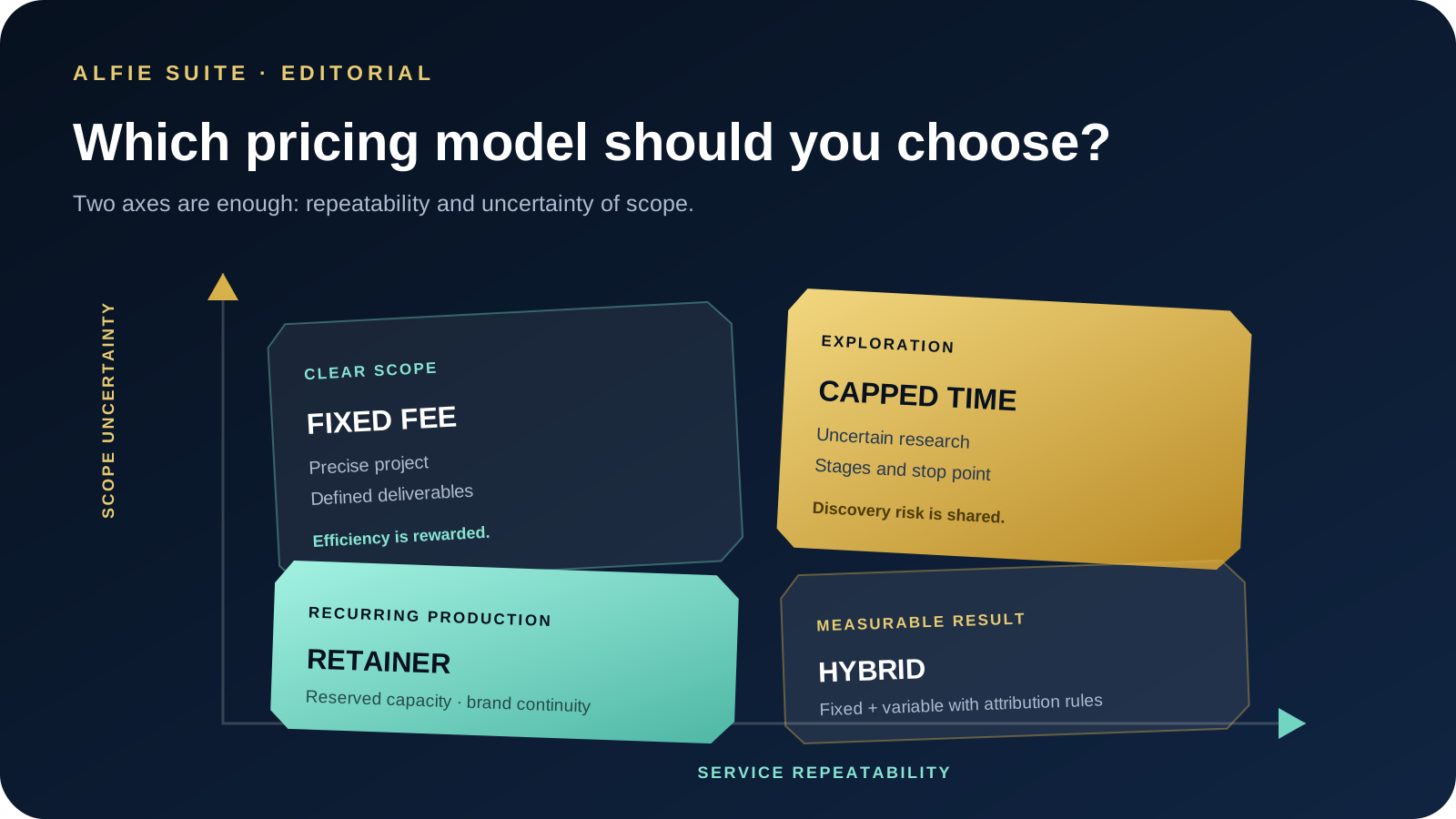
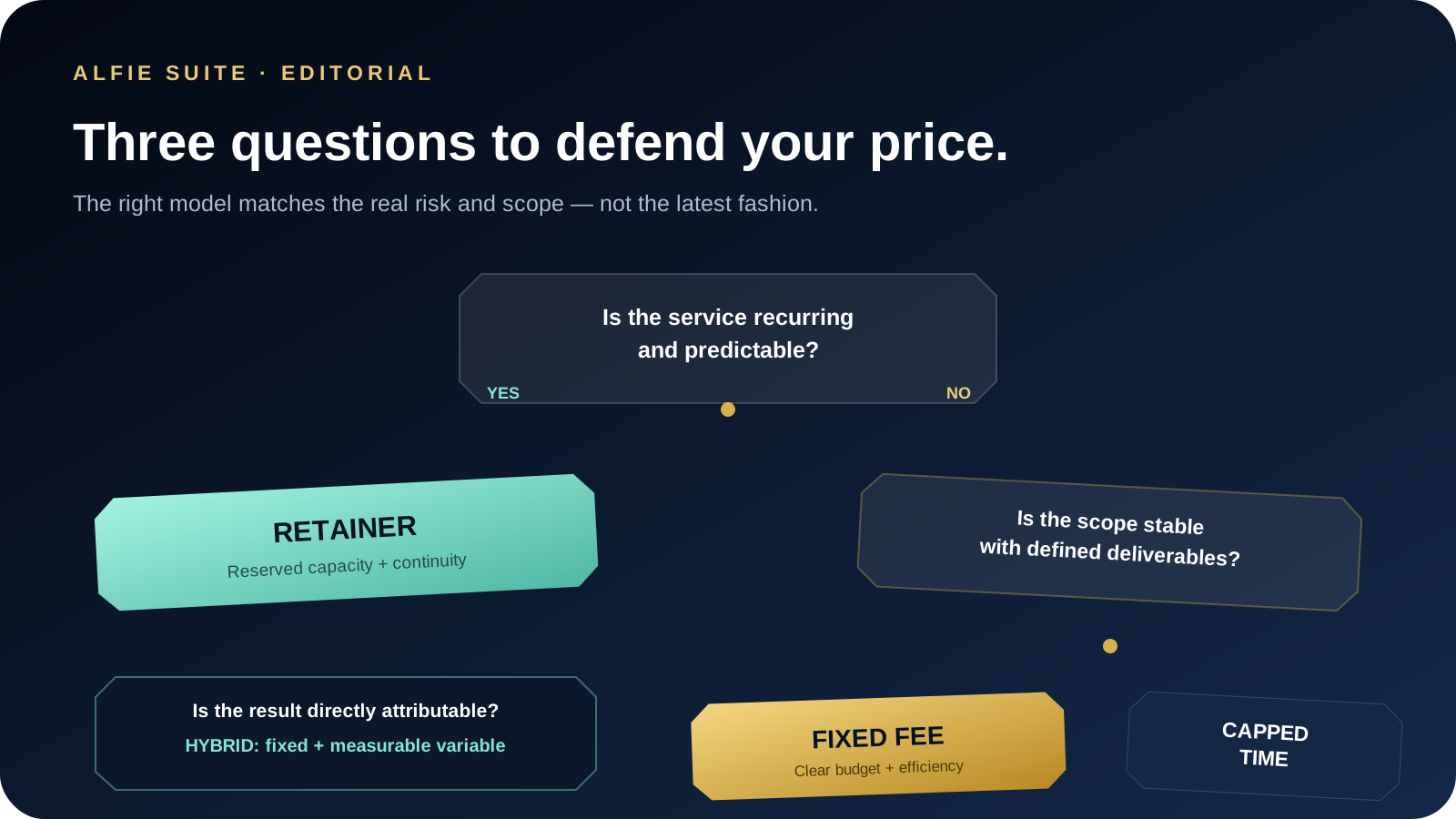
The most common arrangements are therefore mixed: time and materials, project fees and retainers. That is not cultural backwardness. It often reflects the service being sold.
- predictable recurring production suits a retainer;
- a clearly framed transformation suits a fixed project fee;
- uncertain exploration suits capped time and materials;
- a measurable result can support a variable component;
- a hybrid agency can use several models, provided the client understands why.
What the client is really paying for
The button is one second in a much longer crossing. An AI-assisted agency service contains at least six layers.
1. Framing
Understanding the objective, offer, audience, channel, constraints and definition of a successful result. A poor brief simply produces the wrong answer faster.
2. Judgement
Choosing what should be made, what should be rejected, the right angle, the right evidence, the right degree of restraint and the right moment. This is where experience carries the most weight and remains least visible.
3. Production
Writing, designing, adapting, integrating, exporting and making the deliverable usable. Generation is not delivery.
4. Review
Checking facts, brand consistency, readability, rights, exact information and coherence between all campaign elements.
5. Responsibility
Owning corrections, advice, data safety, contractual compliance and the work delivered to the client.
6. Reserved capacity
Guaranteeing a deadline, absorbing feedback, mobilising the right skills and maintaining the infrastructure that makes delivery possible.
AI may reduce the cost of some steps. It also creates costs of its own: subscriptions, API usage, storage, supervision, security, testing, regeneration, governance and training.
The price should not be derived from the cost of a model call. Nobody prices a campaign poster by dividing the fee by the electricity used by the designer’s computer.
When a lower price is legitimate
Refusing every pricing conversation would be a mistake. Efficiency should sometimes be shared, but it should be shared deliberately.
A lower price or more accessible offer makes sense when:
- the service is highly standardised;
- the client supplies a complete brief and clean assets;
- volume allows the framing work to be shared;
- revisions are limited and clearly defined;
- legal and creative risk is low;
- the work is an adaptation rather than a new strategy;
- the agency has turned efficiency into a repeatable product.
Producing thirty product-page variations from an approved structure is not the same assignment as designing the launch strategy, the creative system and the first campaign. In the first case, the agency has already built the road. In the second, it still has to cross the terrain.
AI makes a broader offer ladder possible: standardised, supported and strategic. It does not justify selling each level at the same price or disguising a lightweight service as premium consulting.
When the price should remain stable — or rise
Time saved can be reinvested in what the client actually buys: stronger research, better direction, more testing, tighter quality control, campaign consistency and a shorter lead time.
A price can remain stable when:
- quality and responsibility do not fall;
- the agency delivers faster but reserves the same capacity;
- the work requires deep brand knowledge;
- facts, prices, rights or regulatory statements are sensitive;
- a defined number of versions and revisions is guaranteed;
- strategy and production are combined;
- an error would carry a high commercial or reputational cost.
The price can rise when AI enables an outcome that was previously inaccessible: controlled personalisation at scale, many genuinely reviewed variants, a structured brand system, multi-format orchestration or an exceptional deadline.
The client is not paying more because AI is present. The client is paying for a higher capability and service level.
Which pricing model should an agency choose?
The best pricing model is not the most fashionable one. It is the one that matches how the agency produces, accepts risk and creates the result.
A pricing formula that can be defended
An agency can structure its price in the following way:
Client price = framing base + planned production + review level + responsibility + reserved capacity + margin.
AI costs remain internal operating costs, like software, equipment and subscriptions, unless the client explicitly requests measurable exceptional usage or dedicated infrastructure.
This formula avoids two traps:
- billing only hours and losing money as the agency becomes more efficient;
- invoking vague “value” without being able to explain scope, risk or outcome.
How to present the proposal
A proposal should not contain a line reading “ChatGPT usage: four hours” or a mysterious “AI discount.”
It should show what the client receives:
- framing and recommendation;
- deliverables and formats;
- brand context used;
- level of review and approval;
- number of versions or revision rounds;
- delivery time;
- rights and usage conditions;
- exclusions and scope-change rules;
- agency responsibility;
- the role of AI where it materially matters.
The client can then compare services rather than machine minutes.
Should an agency announce that AI improves its margin?
An agency does not need to disclose every component of its margin. It does need to be honest about its method when that method affects data, rights, the result or the contract.
The strongest explanation is neither defensive nor triumphant:
We use AI to reduce repetitive work and increase our capacity for research, variation and control. Your price reflects the outcome, the level of support, the risk accepted and the agency’s responsibility. When the scope becomes more standard and repeatable, we offer more accessible packages.
That answer addresses the real objection: “Am I paying for expertise, or only for a button?”
It also connects to another central question: how clients perceive an agency’s use of AI. A price becomes difficult to defend when the client can no longer see the work, the controls or the person responsible.
What this means for Alfie Suite
Alfie Suite separates visible value from internal machinery. The client begins with an objective or a Mission, validates a recommendation and receives organised deliverables. Internal production units help estimate, reserve and control costs; they should not reduce the service to token consumption or a pile of disconnected assets.
A Mission makes the price easier to defend because it brings together:
- brand context;
- strategy or framing;
- expected deliverables;
- the specialists involved;
- validation points;
- quality control;
- versions;
- export and history.
The client is not paying for a generation. The client is paying for a framed, coherent and deliverable marketing result. That is also why a definitive failure should never appear as a finished delivery: an undelivered production must be corrected, rerun or refunded according to the applicable rules.